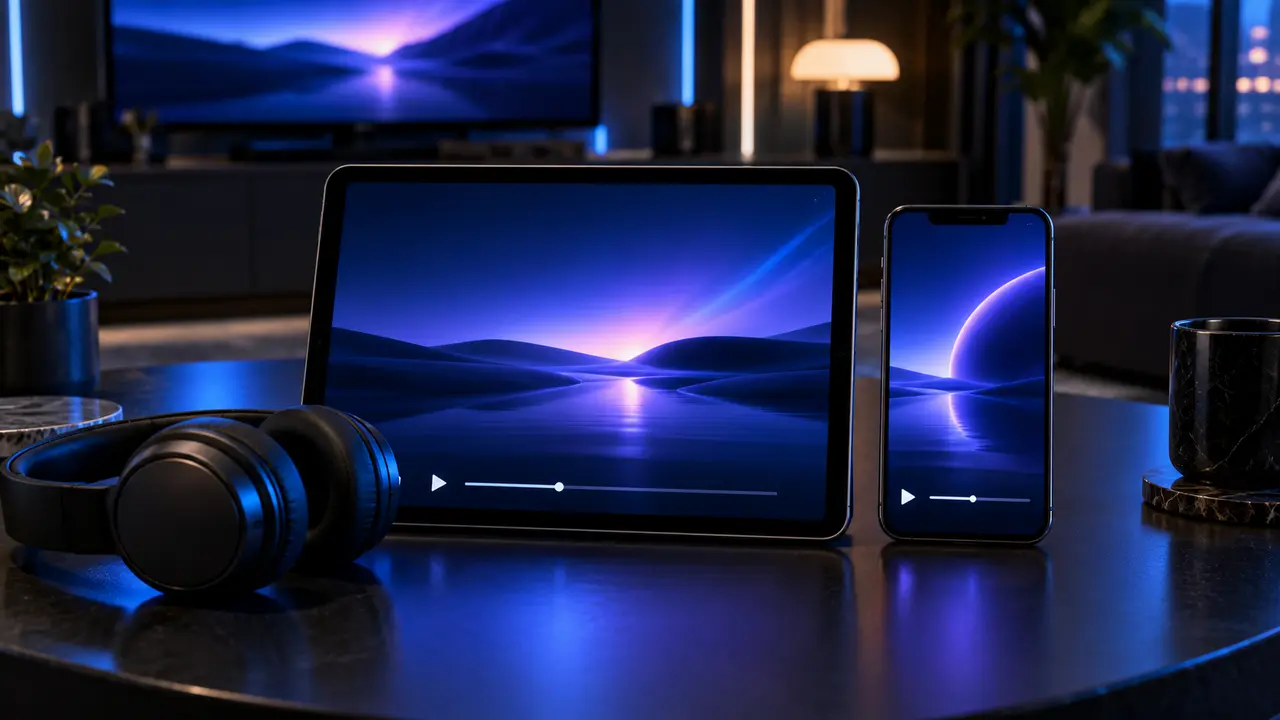
Understand sender-app support, local network discovery, playback handoff and why casting can differ from native TV apps. Begin with the final device and current service details, make one change at a time, and keep account information private.

Why this check matters
Understand sender-app support, local network discovery, playback handoff and why casting can differ from native TV apps. A useful result should tell you which part of the path needs attention: the subscription source, player app, hardware, local network or internet route. Guessing across all five layers usually creates more variables and makes the original problem harder to reproduce.
Install on several devices, but confirm the allowed concurrent connections. This visual sits beside the relevant explanation rather than being used as a generic decoration. The page also includes a clear publication date, visible author, focused title and descriptive image metadata.
What to prepare before you start
Write down the device model, operating system version, player name, login format and whether the connection is Ethernet or Wi-Fi. If the issue happens only in one category, record the category and exact time without copying private account URLs.
- The final device and its current software version
- The exact player name and supported login method
- A current trial or active authorised account
- A repeatable test and a known-good alternative where possible
Privacy check: screenshots can reveal server addresses, usernames, device IDs and playlist tokens. Crop or blur those fields before sharing an image with anyone.
Casting IPTV to Chromecast and Google Cast Devices: step-by-step
1. Connect the phone and receiver to the same trusted network
Connect the phone and receiver to the same trusted network. Complete this step on the same device and connection you intend to use regularly. Record the result before moving forward so a later change can be compared with a clean baseline.
Do not skip this preparation because instructions that look similar can behave differently across television operating systems, player versions and account formats.
2. Confirm that the player supports proper casting
Confirm that the player supports proper casting. Complete this step on the same device and connection you intend to use regularly. Record the result before moving forward so a later change can be compared with a clean baseline.
If the result is different from the previous step, pause and repeat it once. A reproducible difference is more useful than a one-off improvement.
3. Start with a lower-complexity source
Start with a lower-complexity source. Complete this step on the same device and connection you intend to use regularly. Record the result before moving forward so a later change can be compared with a clean baseline.
If the result is different from the previous step, pause and repeat it once. A reproducible difference is more useful than a one-off improvement.
4. Keep the sender device awake until playback is handed off
Keep the sender device awake until playback is handed off. Complete this step on the same device and connection you intend to use regularly. Record the result before moving forward so a later change can be compared with a clean baseline.
Finish with several minutes of realistic playback or navigation. A successful menu load alone does not confirm sustained viewing stability.
Decision table
| Checkpoint | Pass result | If it fails |
|---|---|---|
| Connect the phone and receiver to the same trusted network | The same test works consistently on the intended setup. | Return to the previous known-good state, note the difference and change only the next relevant layer. |
| Confirm that the player supports proper casting | The same test works consistently on the intended setup. | Return to the previous known-good state, note the difference and change only the next relevant layer. |
| Start with a lower-complexity source | The same test works consistently on the intended setup. | Return to the previous known-good state, note the difference and change only the next relevant layer. |
| Keep the sender device awake until playback is handed off | The same test works consistently on the intended setup. | Return to the previous known-good state, note the difference and change only the next relevant layer. |
A pass is not a ranking claim or performance guarantee. It is evidence about the device and conditions tested at that moment. Catalogue sources, network routes and third-party apps can change later.
Common mistakes to avoid
1. Assuming screen mirroring and native casting are identical
Assuming screen mirroring and native casting are identical can make the diagnosis less reliable or expose information that should stay private. Use the controlled workflow above, keep a note of original settings and ask for clarification before making a destructive reset.
2. Casting private account URLs through unknown helper apps
Casting private account URLs through unknown helper apps can make the diagnosis less reliable or expose information that should stay private. Use the controlled workflow above, keep a note of original settings and ask for clarification before making a destructive reset.
3. Blaming the subscription when local device discovery is blocked
Blaming the subscription when local device discovery is blocked can make the diagnosis less reliable or expose information that should stay private. Use the controlled workflow above, keep a note of original settings and ask for clarification before making a destructive reset.
When to contact support
Contact Dino IPTV support when the basic device and network checks are complete, the same current source fails in more than one compatible player, or the question depends on account status and present catalogue information. A concise request should include the device, app, connection type, affected category and timestamp.
Do not include a full playlist URL, password, device key or complete payment-card information. If you believe access details were exposed, request a credential reset rather than continuing to share the old values.
Frequently asked questions
What should I prepare before following this Casting IPTV to Chromecast and Google Cast Devices guide?
Have the exact device model, operating system, player name, supported login method and current network details ready. Do not paste private credentials into a public page or forum.
Should I change every setting in the guide at once?
No. Start with connect the phone and receiver to the same trusted network, then change one layer at a time. A controlled test makes it easier to identify the real cause and reverse an unhelpful change.
When is Dino IPTV support needed?
Contact support after the local device and network checks are complete, or whenever current account terms or category availability must be confirmed. Include the exact symptom and timestamp.